
How to Start a Vending Machine Business in 2026: The Semi-Passive Income Playbook
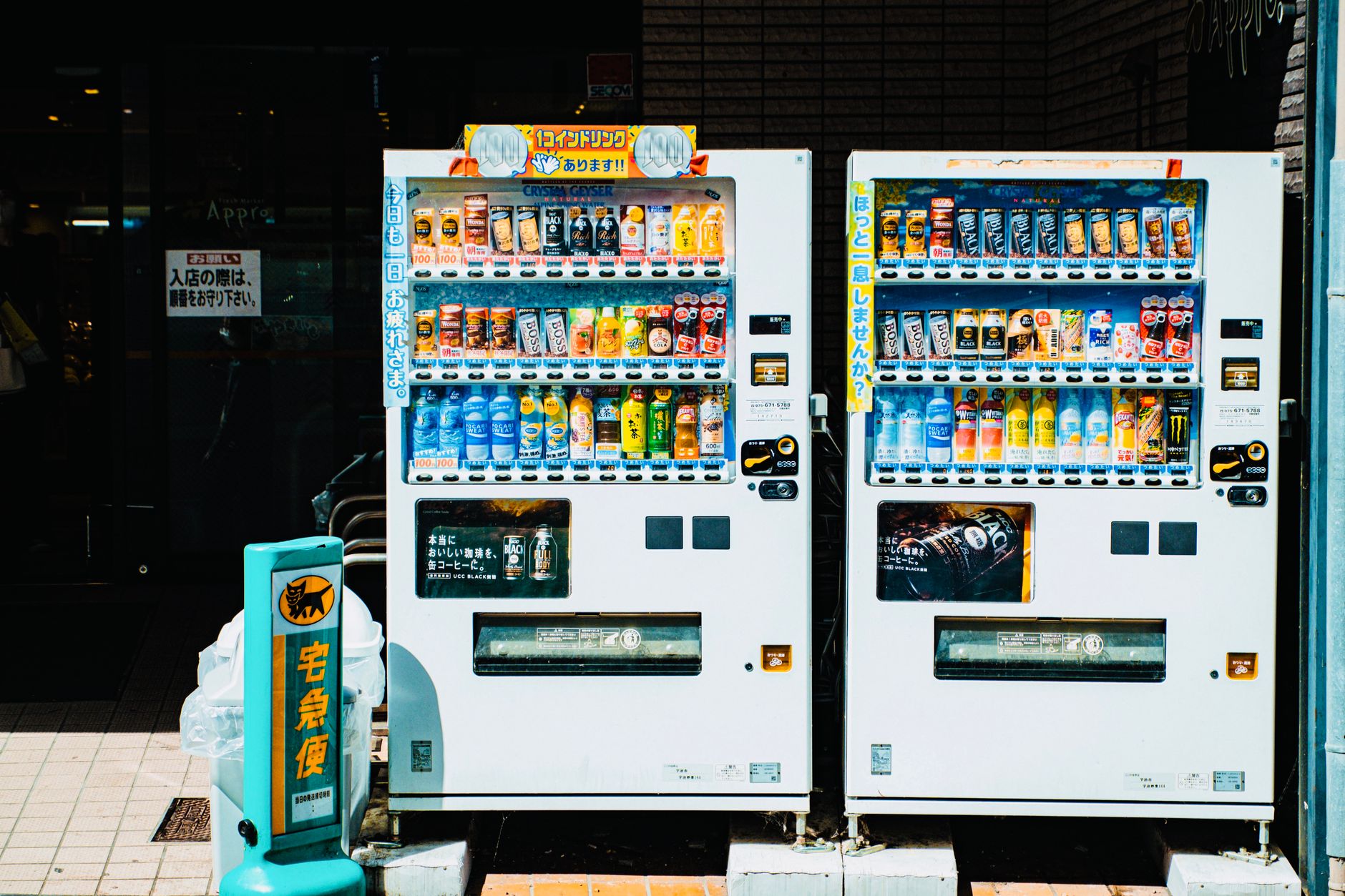
The vending machine industry just hit a turning point. With contactless payment adoption reaching 87% of transactions in early 2026 and smart inventory systems becoming standard, the barriers to entry have never been lower. Yet most people still think vending machines are stuck in the 1990s.
If you’re wondering how to start a vending machine business, you’re looking at one of the most misunderstood semi-passive income streams available. Unlike the digital side hustles flooding your social feed, vending machines offer tangible assets, predictable cash flow, and genuine scalability. But they also require real work upfront and smart location strategy.
This guide walks you through the exact steps to launch a profitable vending operation in 2026, with real numbers and zero fluff.
Why Vending Machines Are Having a Moment in 2026
Three trends are converging to make this the best time in a decade to enter the vending space.
Cashless payment dominance means you’re no longer dealing with coin jams or making change. Modern card readers and mobile payment systems have eliminated 80% of the mechanical headaches that plagued older machines. According to the National Automatic Merchandising Association, machines with contactless readers see 23% higher transaction volumes than cash-only units.
Smart inventory tracking has gone mainstream. Telemetry systems that cost $30-50 per month now tell you exactly what’s selling, when to restock, and which products are duds. You’re not driving around checking half-empty machines anymore.
Micro-market and specialty vending is exploding. Healthy snack machines in gyms, PPE vending in industrial facilities, and even book vending in apartment complexes are commanding premium margins. The days of competing solely on chips and soda are over.
The result? A single well-placed machine can net $300-800 per month after expenses, and the route scales linearly as you add locations.
The Real Startup Costs (No Sugarcoating)
Let’s talk actual numbers, because the “start for $500” crowd is lying to you.
New machines run $3,000-6,000 for a quality combo unit (snacks and drinks). Refurbished machines from reputable dealers cost $1,500-3,000. Facebook Marketplace deals under $1,000 exist, but you’re gambling on compressor life and outdated payment systems.
Essential add-ons you can’t skip:
- Credit card reader: $300-500 (one-time) plus 5-7% processing fees
- Telemetry/inventory system: $30-50/month per machine
- Initial inventory: $150-300 per machine
- Business license and insurance: $400-800 annually
Location acquisition costs vary wildly. Some property owners charge 5-10% commission on gross sales. Others want flat monthly rent ($25-100). High-traffic spots like hospitals or universities might require competitive bidding or revenue-sharing agreements.
Realistic total investment for your first machine: $2,500-4,500 if you’re buying refurbished with modern payment systems. Anyone telling you otherwise is selling a course.
The math works if you secure a location doing 15+ transactions daily. At $1.50 average profit per transaction, that’s $675/month gross, or roughly $400-500 net after location fees, inventory costs, and processing fees.
Finding Locations That Actually Make Money
Location determines 90% of your success. A mediocre machine in a great spot beats a premium machine in a dead zone every single time.
Target locations with captive audiences:
- Manufacturing facilities with 50+ employees on shift
- Apartment complexes with 100+ units
- Auto repair shops and tire centers (customers wait 45+ minutes)
- Laundromats in dense urban areas
- Community colleges and trade schools
Avoid these money pits:
- Retail stores (customers leave to shop elsewhere)
- Locations with free break room snacks
- Spots requiring long drives between service calls
The pitch matters. Don’t lead with “I want to put a machine in your building.” Lead with “I provide a convenience amenity for your employees/tenants at zero cost to you, and I handle everything.” Property managers hear vending pitches monthly. Differentiate by offering revenue share, committing to 48-hour restock guarantees, and showing proof of insurance.
Scout before you commit. Visit the location at different times. Count foot traffic. Check for existing machines (you don’t want to compete with an established operator unless they’re clearly neglecting the account). Talk to employees about what they’d actually buy.
One operator I know landed a 24-hour manufacturing plant by offering to stock energy drinks and protein bars the previous vendor ignored. That single machine does $900/month because he listened to what shift workers wanted.
Operations: The Semi-Passive Reality Check
Here’s what nobody tells you: vending machines are semi-passive, not passive. You’re running a small logistics business.
Restocking frequency depends on traffic. High-volume locations need service twice weekly. Slower spots might only need attention every 10-14 days. Budget 15-20 minutes per machine for restocking, cleaning, and basic maintenance.
Inventory management is where beginners bleed money. Buying snacks at Costco and marking them up 50% doesn’t work when Sam’s Club charges $0.60 for chips you’re pricing at $1.25. You need wholesale accounts with distributors like Vistar or local restaurant supply companies. Margins should be 50-60% on snacks, 40-50% on drinks.
Maintenance issues will happen. Bill validators jam. Cooling systems fail. Card readers go offline. Budget $200-400 annually per machine for repairs, and learn basic troubleshooting via YouTube. Most issues are sensor cleaning or belt adjustments you can handle in 10 minutes.
Route density matters more than machine count. Five machines within a 10-mile radius beat ten machines scattered across 50 miles. Your time is the hidden cost nobody factors in. A tight route lets you service everything in one afternoon.
The operators making real money treat this like a business, not a side hustle they check monthly. They’re tracking sales data, rotating slow-moving products, and constantly hunting for better locations.
Scaling Beyond Your First Machine
Your first machine is a proof of concept. Once you’ve validated the model and ironed out operational kinks, scaling becomes straightforward.
Reinvest profits into machine two and three rather than pocketing early returns. A three-machine route generating $1,200/month net gives you $400/month to save toward the next unit while still taking home $800.
Specialize your product mix as you expand. If machine one in a gym does well with protein bars and electrolyte drinks, lean into health-focused vending for your next three locations. You’ll negotiate better wholesale rates buying in volume, and you’ll develop expertise in a niche.
Consider micro-markets once you hit 5-7 traditional machines. These unattended retail spaces (think a small cooler and snack rack with a self-checkout kiosk) generate $2,000-4,000/month in corporate offices. They require more capital ($8,000-15,000) but the margins and volume justify the jump.
Hire route help around machine 8-10. Paying someone $15-18/hour to handle restocking frees you to focus on acquiring new locations and optimizing product mix. This is where vending transitions from side hustle to legitimate business.
Your Next Steps to Launch in the Next 30 Days
Learning how to start a vending machine business means nothing without execution. Here’s your action plan:
Week 1: Secure your business license, insurance, and wholesale accounts. Budget $500-800 for legal setup.
Week 2: Scout 10 potential locations and pitch three property owners. Expect two rejections for every yes.
Week 3: Purchase your first refurbished machine with a card reader already installed. Inspect it in person before buying.
Week 4: Install the machine, stock it with 15-20 product SKUs based on location demographics, and set your telemetry alerts.
The vending machine business isn’t get-rich-quick. It’s a legitimate path to semi-passive income that rewards hustle, location strategy, and operational discipline. Start with one machine, prove the model, then scale aggressively. The operators making $3,000-5,000/month didn’t get there overnight, but they all started exactly where you are now.